Day 16: York – Cambridge

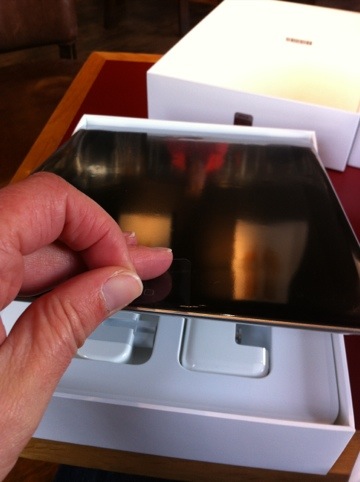
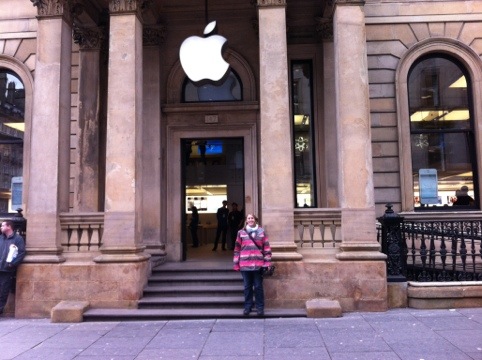
We started early today, up at 6:00 and out the door at 6:30. We were on a mission – the new iPad was due to be released this morning and we were keen to get our hands on one. There was already one person in line when we arrived, and a few more arrived while we waited. By 7:30 there were seven of us, and the line didn’t get a lot bigger than this. So by 8:45 when the store opened its doors, everyone was able to get what they came for. Stephen and I got a black 64gig wifi+4G model each.

We probably didn’t need to line up, but there is something quite fun about standing in anticipation with other Mac geeks waiting for the latest thing. We share stories and compare gadgets and just generally have a geeky good time.

We went to the local Pret coffee shop for the unboxing, and then back to the hotel for set up. Let me tell you, this thing is just gorgeous. It’s light, the screen is oh-so sharp, and it’s blazing fast. I didn’t get an iPad 2 last year (just Stephen had one) so the jump up to the new iPad is huge. And I’m loving it.

We drove from York to Cambridge today – not a very interesting drive and it took us about 4 hours. Cambridge is a stop along the way to London rather than a destination of its own. We are both a little tired so the remainder of our afternoon was spent playing with our new toys.

Ben helps us with our purchase

20120317-095335.jpg

The first sneaky peak

20120317-095459.jpg

View from the car driving to Cambridge – cooling towers from a nuclear power plant

20120317-095631.jpg

Day 15: Whitby – York

We had a leisurely start to the day since breakfast didn’t start until 9am. I was not very impressed with breakfast it has to be said. I usually have muesli, yoghurt and fruit. It lines my belly well and keeps my energy up all morning. They had muesli, but no fruit (except a single manky apple) and no yoghurt. I left the table a wee bit hangry. Not a great start to the day. Luckily while we were out walking down at the beach I found a great little cafe that served a good latte and sandwiches. Hurrah!

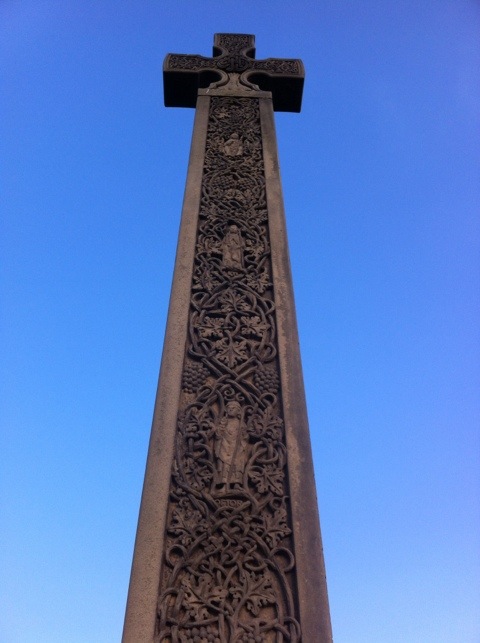
We walked uphill to the Captain Cook memorial, along the pier, and then jumped in the car and headed for York. We drove through the Yorkshire moors to get here – very cool. The moors are misty and soft and so different than anything we have at home. Lovely.

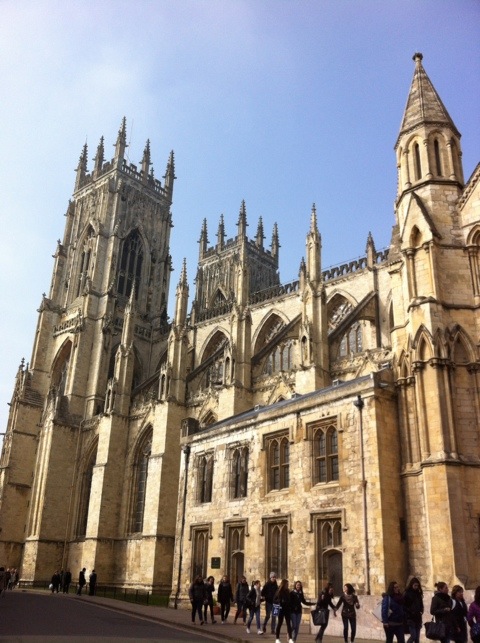
York is fantastic. It has a cathedral (but called a Minster, to denote that it’s special). The minster is the seat of the Archbishop of York, the second-highest office of the Church of England, so it’s pretty important. And you can definitely tell as soon as you enter this church – it is obviously more wealthy than any other church we’ve visited. The church is undergoing a £10m restoration at the moment – re-carving the stonework and re-leading the stain glass windows. It’s been going since 2006 and is due to be completed at the end of 2012. It really looks magnificent.

It’s a funny thing really, to completely restore the church, since it will eradicate some of the original work that dates from c1100. It’s great that the church will be seen in its full glory, much as it was when first completed, but it will no longer be the same church as it was then. The restoration involves removing the original stonework and replicating it before installing it in place of the original. Some of the original stonework will be kept, and the rest will be sold to fund the continued upkeep of the church.

The upside of this process is that it provides a training ground for a large group of stonemasons and other restoration experts who will receive their training here and then take their knowledge on to other places. They are being taught how to carve and work on the cathedral in the manner of the workers who first built it. That’s a cool idea.

I’m feeling a bit travel weary today, so the remainder of the day (4pm onward) will be spent lounging in our hotel room and eating. Ahhhhhh.

York Minster

20120315-183938.jpg

Day 14: Langley – Whitby

We started the day with a Roman fort along Hadrian’s Wall. The wall was built in the 1st and 2nd century as a dividing line between England and Scotland. The Romans successfully subdued the locals in the South, but had no luck with the barbaric Northerners, so walled them off and left them to it.

The fort (called a mile castle, because there was one every mile along the wall) was quite intact, I’m guessing because the area is quite inaccessible, so no one bothered to rob it out or plow it after the Romans departed. You can still see big parts of buildings, it’s amazing.

From here we headed into Durham for lunch, and a look at the cathedral. This 1000-year-old church houses the bones of no less than two saints – St Cuthbert and St Bede. Not surprisingly, Durham was sacked by Henry VIII and is now, like most cathedrals in Britain, owned by the Church of England. It is a huge place, and allows you to climb the 325 steps up to the very tippy-top of the 66 metre high central tower. it’s the tallest tower in the city, and the views are amazing!

We drove on to Whitby from here, through the Yorkshire moors. They looked as moorish as I was hoping for – lots of heather and mist.

Whitby, a seaside fishing town, is a very cool place. It has a mish-mash of buildings all put together over hundreds of year, and none of them with a plumb line by the looks of them. It’s a every old town, first settled in the 7th century.

Stephen and I were keen to come here for different reasons. I was excited to see the place that James Cook learned his trade, and where the Endeavour was built in 1764.

Stephen was keen to see the abbey where, in 664, a meeting (Synod) of the chiefs of the area and the monastic leaders took place. The two main churches – the Roman and Ionan (Celtic) had different methods of calculating Easter, and they met to decide which one to adopt. They went with the Roman. It decision was about more than just Easter though, it meant that the Roman rather than the Celtic church became dominant in Britain after this time. And this domination continued until Henry VIII split with the Catholic church in the 16th century (during what is now called the Reformation) and created the Church of England. The abbey that stands on the hill above Whitby today is of later vintage (10th century) and was sacked during the Reformation. Full circle.

So that’s your history lesson for today! We had a good poke around Whitby this afternoon, and a lovely Thai dinner before retiring to our truly lovely B&B, tucked up at the top of the 3-story building and very cosy.

20120315-082503.jpg

Day 13: Edinburgh – Langley

We had a quick walk around Edinburgh this morning before heading out of town. It’s a cool place, but we definitely knew we were in a big city – lots of people and cars. Which is weird because Edinburgh has about the same population as Christchurch, but it feels like a much bigger and busier city – more metropolitan than ours, even before the earthquakes.

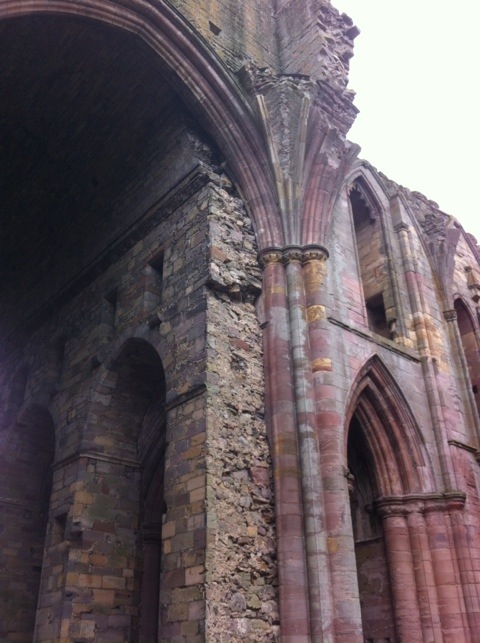
Our next stop for the day was Melrose Abbey, founded in 1146 by Cistercian monks. It is the final resting place of a number of Scots kings, and Robert the Bruce’s heart is buried there too. The ruined abbey was lovely – made of rose stone so a lovely pinky-red colour. Like many others abbeys around the borderlands, it was sacked during the 16th century Reformation.

Jedburgh Abbey was just up the road, so we popped in there too. Another lovely ruin, this one had been subject to intensive archeological investigation in the 1980s, so a lot of the below-ground buildings that were ruined and buried have been quite well preserved. This abbey was founded by the Augustinians, also in the 12th century. It suffered the same fate as Melrose during the Reformation. It’s hard to imagine how people could desecrate such lovely places as these.

Something that amazes me about these old buildings is that they continue to be used after they are ruined. Both abbeys we saw today continued to be used as churches even though they were sacked repeatedly. At Jedbugh the church just moved to the most upright end of building and kept going, and at Melrose they actually built a new church and columns inside the buildings over top of the old ones. It looks really weird.

Melrose Abbey. You can see the new columns and ceiling tucked inside the old building

20120313-191322.jpg

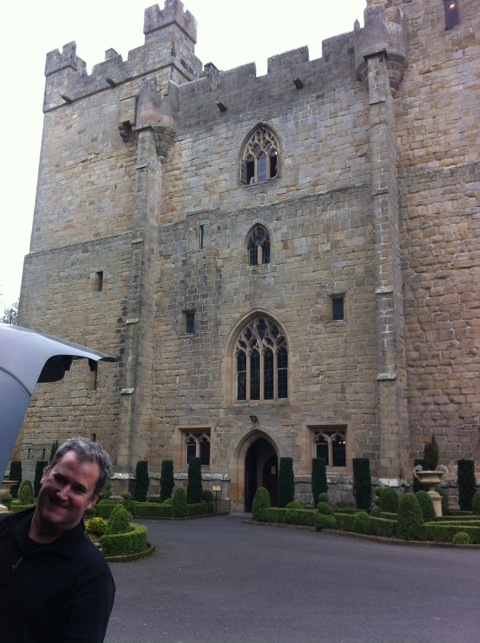
We got to our hotel in Langley with plenty of time for a lazy afternoon. It’s been a busy couple of days of driving, so it’s nice to have days when we don’t do too much. We are truly staying in style tonight – in a 14th century castle, carefully restored and turned into a hotel after WWII. It is very cool. We are staying in one of the fancy rooms on the second floor, accessible by a spiral staircase. It is very well appointed, with a big cosy four-poster bed, our own wall alcove, and a heated bathroom floor. Tonight we live like kings!

20120313-191620.jpg

An aside: The Fat Bastard Tour

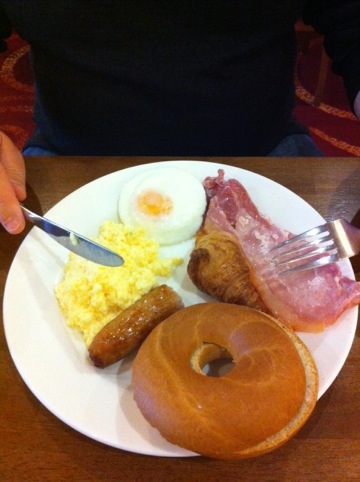
We have dubbed this trip the “Fat Bastard Tour”. It’s all about being to eat whatever we want while we are here without worrying about the calories. This means that Stephen has had yummy full breakfasts of eggs, sausages, bacon and croissants every morning. I can’t quite manage that of course, but I’ve been able to eat some great low fat junk food, and feel like I’m eating pretty much round the clock. It’s great!

The fat bastard breakfast

20120313-102251.jpg

Day 12: Aberdeen – Edinburgh

We were up and out early this morning, with every intention of getting to Edinburgh by lunchtime. And once again, we were distracted by other interesting things along the way.

We stopped at Dunnottar Castle in Stonehaven – a seaward fortified castle and abbey complex. It wasn’t open, but we got a great view of it from the steps that ran down to the water, and gave our legs a bit of a workout getting back up to the car afterward.

The next stop was at St Andrews, the home of golf. We stopped in to grab something to eat, and instead spent an hour looking at the abbey and castle there. They were really cool.

At one point in the 14th century, St Andrews Castle was under siege. The attackers could not get in through the front gate, so they concocted a plan to dig a tunnel under the front entrance of the castle and blow the gate up. The attackers tunneled through the solid rock for over a week before the people in the castle realised what they were up to and dug through from inside the castle walls to meet them in the middle. The guys inside the castle had to dig a couple of tunnels before they got the right spot. Through solid rock mind you. One imagines they had nothing much else to do, sieging being a long and boring business as it is.

Stephen heads down the tunnel, storming the castle!

20120312-192227.jpg

St Andrews itself is a lovely town – a seaside village with one of Britain’s oldest and most prestigious universities. It felt every much like a university town, with lots of young people wandering around.

Eventually we made our way to Edinburgh, with plenty of time to have a poke around the castle before heading to the pub for dinner. The castle is surprisingly small really, but that’s in comparison to some of the huge castle complexes we saw in North Wales and Scotland. It’s kinda sad that most tourists don’t venture beyond Edinburgh into the north. Although Edinburgh is the most complete castle we’ve seen, it’s not the most magnificent. I think that would be a dead heat between Stirling and Chepstow in Wales. Now, they were castles!

The best thing about today was the weather. The sky was clear all day and the sun was warm. It was so nice to wander around in the warm sun and just soak it all in.

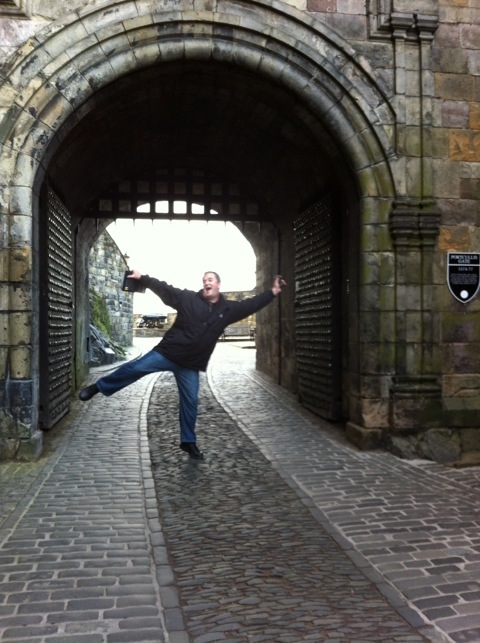
Mmmm…at the entrance to the inner bailey at Edinburgh Castle

20120312-192408.jpg

Day 11: Inverness – Aberdeen

The B&B had a gloriously comfy bed – the best we’ve slept in since we’ve been here, so it was hard to get up and at ’em, but we did. Had a lovely home-cooked brekkie and then tootled off to see Loch Ness and Urquhart Castle.
The castle was great – standard fare for us now, but it was overrun with 50 or so Japanese teenagers, a little disconcerting. I was honestly gobsmacked at how they behaved – they were clambering all over the ruins, running around squealing and such. I wondered out loud to Stephen is they would treat their own cultural heritage in such a disrespectful way (I know, I sound old, but it really upset me).
I’m very aware that we are guests in this country, and most of the sites we have visited are actually sites of mass murder at one time or another. It gives an air of gravity to the place, and I want to act accordingly. In fact, at Culloden a plaque asks that guest be quiet as we are walking through a mass grave. It’s important to them, and the least I can do is respect that.
That said, we had a lovely day. We drove all the way around Loch Ness. It was stunningly beautiful. It was a mild day, and the drive was pleasant, if a little rural.
Once we got back to Inverness and managed to find a way into town that avoided the Inverness marathon that was taking place (!) we had some lunch at the Eastgate Shopping Mall, and then headed in the direction of Aberdeen.
We didn’t get too far before Stephen noticed a sign pointing to a Pictish hill fort some 8 miles off the highway. We went for it! It was cool, in a small seaside village, and quite famous it turns out. There aren’t many remains dating from pre-Roman Britain, so this site is quite precious. I was glad we stopped.
We eventually reached Aberdeen by about 6pm, and immediately went off in search of a laundromat. There were only two washers working, and a queue of people, so it took us a good couple of hours to get it all done. There is something about doing laundry when you’re traveling though – it’s a chance to relax and do nothing for awhile. I enjoyed it but was pleased to be done.

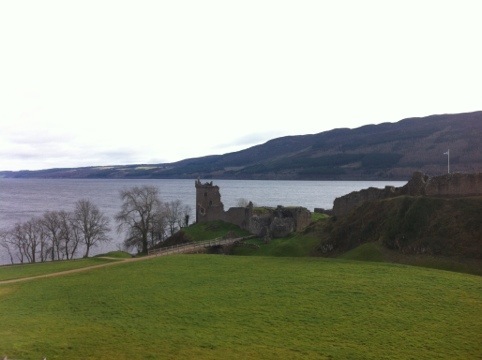
View of Urquhart Castle and Loch Ness

20120311-222751.jpg

Day 10: Perth – Inverness

We popped along to Blair Castle in the morning before beginning the journey into the highlands. It was good to see another castle that’s been in continuous use since it was built in the 13th century. It was jam-packed with treasures representing every era since then.

The drive to Inverness was lovely. Very picturesque with rolling hills and babbling brooks and lots of little villages. We stopped for lunch at one such place. We wondered at what on earth these people all do with themselves all day. I’m guessing many people must commute to a nearby town or city for work.

We arrived in Inverness in the early afternoon, and went straight to Culloden Moor while the weather and light were still good.

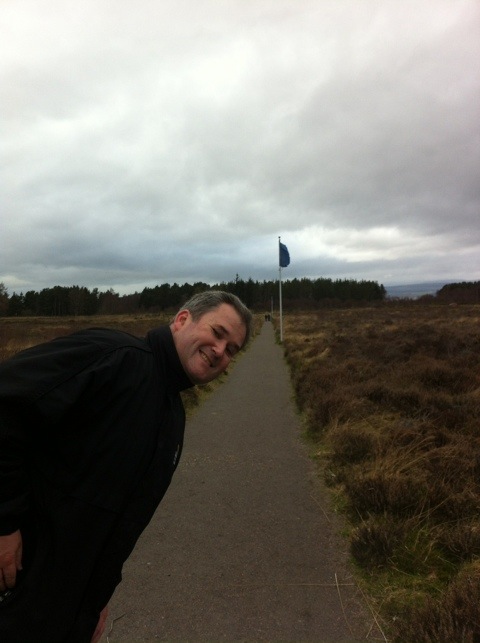
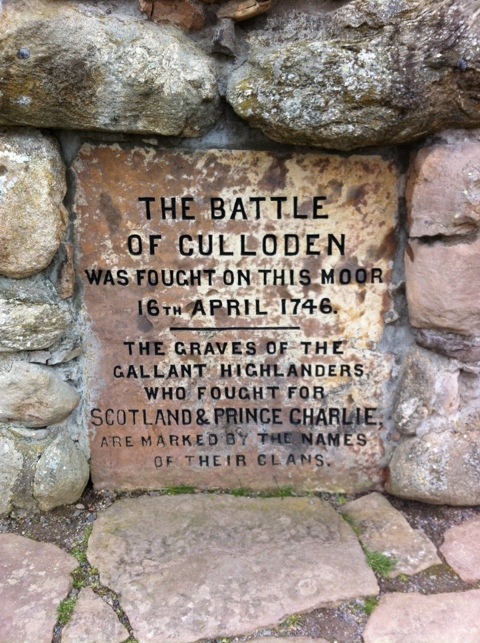
Culloden is an amazing place. It was a battlefield – it tells the story of the last hand to hand battle fought on British soil, between the English and the Scots in 1746. It was the culmination of a series of skirmishes that formed the Jacobite Uprising – where Bonnie Prince Charlie attempted to claim the Scottish crown on his father’s behalf (James III, exiled in France) and assert Scottish independence from the English. It was an unsuccessful battle for the Scots. In 60 minutes of fighting, approximately 1500 Scotsman died, and about 50 Redcoats. More than that though, the defeat of the Uprising lead to the decimation of the Scots as a people. To prevent another outburst, the English put down the Scots harshly – Gaelic, kilts and clan tartans were all banned, and Scots were cleared off their land in favor of English settlement. It’s a shameful part of English history, and so powerful to see the place it all begun and ended so dramatically.

We are staying in a cute and cosy little B&B tonight in Inverness – a contrast to the fancy place last night! It’s on the banks of the river Ness with a lovely river view out or bedroom window. Winner all round.

20120310-184500.jpg20120310-184532.jpg20120310-184620.jpg20120310-184642.jpg20120310-184703.jpg

Day 9: Glasgow – Perth

The main destination for today was Stirling. It has a castle, and the Wallace Monument, and was an important spot in the Scots war for independence (which started in c1100 and only really ended when they elected their own parliament in 1999).
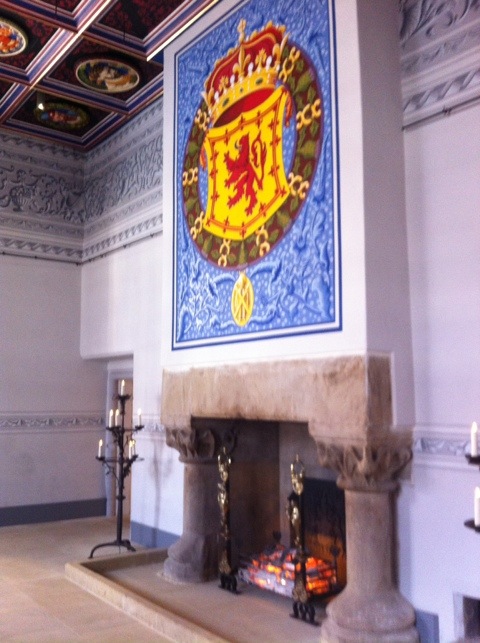
Stirling Castle was amazing. Until the 1960s it was used by the army to store munitions and as a barracks. Since then, it has been carefully restored to its former c1500s glory. It was really good to be able to see a castle as it would have looked in the 16th century. We’ve seen a lot of ruins, and it takes imagination and a good deal of squinting to see them as they would have looked in their heyday. Stirling is bright and full of colour.

The resplendent King’s chamber

20120310-085829.jpg

They have a project, begun in 2001 and almost completed, to make seven huge tapestries for the Queen’s chambers. The originals of these are in the MoMA in New York City, and several weavers are working to faithfully replicate them. You can watch them work. Very cool.

One of the seven colourful tapestries hanging in the Queen’s chamber

20120310-085607.jpg

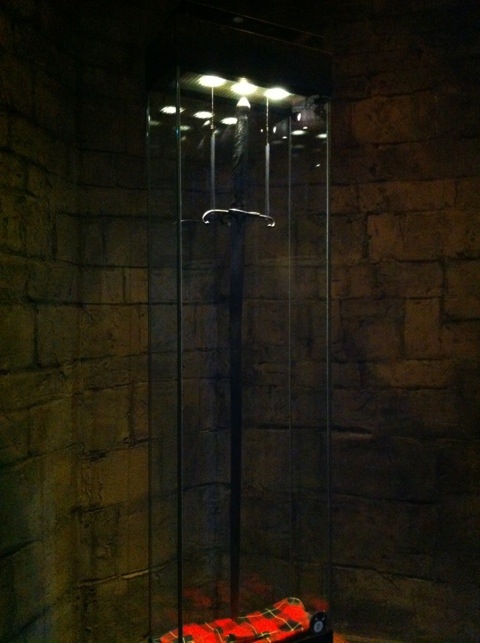
From the castle, we stopped by the Wallace Monument, completed in 1891 to remember William Wallace – the commoner who defeated the English at the Battle of Stirling Bridge in 1297 and started a fervent nationalist sentiment in Scotland that remains today. If you’ve seen the movie Braveheart, you know how the story of William Wallace ends.

William Wallace’s claymore. It stands 164cm tall. He must have been a large man!

20120310-090051.jpg

On our way to our hotel, we stopped in at Scone to see the chapel where Scottish kings and queens were traditionally crowned. It also contains a replica of the Stone of Scone, the original was brought to England by Edward I in 1296 as a spoil of war. It has crowned English monarchs ever since. It was returned to the Scots in 1996 and the original is now in Edinburgh castle (with a promise that the English can use it when they crown their kings and queens in the future).
Tonight we are staying in a very grand manor house, built in the mid-1800s. It’s lovely, with roaring fires, cosy couches and delicious food. Heaven.

It’s an unassuming little chapel, for such an important place

20120310-090332.jpg

Day 8: Penrith – Glasgow

We had intended to leave Penrith early and zip through to Glasgow to be there for the day, but instead had a leisurely morning and left the hotel around 9:30am.

The first stop for the day was Carlisle – to see the castle of course! Most of the castle complex was still shut down for the winter, but we were able to have a wander round and get a sense of it. This was a very important castle throughout its history – it housed Mary Queen of Scots when Elizabeth I decided she shouldn’t be allowed to roam around as she pleased. It was also important during the Jacobite uprising in the 1700s in Scotland – the castle held hundreds of Jacobean (Scots) prisoners captured by the English.

Carlisle Castle

20120309-074635.jpgb

From Carlisle was a very picturesque and somewhat lengthy drive to Glasgow. We arrived in time for lunch, and so went for a wander around town. Glasgow is a big, bustling, ugly place. It’s a city of a million people, and suffers from all the problems of high density living – pollution, people, traffic. It also has high unemployment, and vast towering tenement blocks. It’s not an attractive place, and a stark contrast to the small villages we’ve spent most of our time so far.

It was nice to be able to wander in the hustle-and-bustle for a while – do a bit of window shopping, but we were well done by mid afternoon, and so spent the afternoon and evening lounging in the comfort of our hotel room. Room service, bliss.

20120309-074759.jpg

20120309-074822.jpg